A Book Review:
Jack Miles' God in the Qur’an brings the three Abrahamic traditions to the table
Books tags: Islam, Christianity, books, Judaism, religious history
December 8, 2019
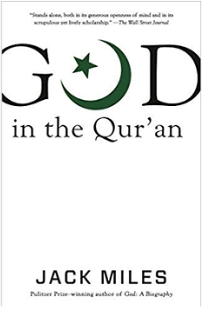
God in the Qur'an
Jack Miles' God in the Qur’an brings the three Abrahamic traditions to the table
by Zaman Stanizai
We cannot force someone to hear a message they are not ready to receive, but we must never underestimate the power of planting a seed.
In God in the Qur’an, Jack Miles is planting that seed. A seed that brings the three Abrahamic traditions to the table. A table where, for centuries, the commonality of names and terminology not only concealed the essential and symbolic concepts they represented but also the subtle distinctions and critical differences across these traditions. Understanding the implications of these identities and expressions within each tradition will allow an evolving understanding of the historical/biblical personalities, as well as the metaphysical, parapsychological, and deeply theological phenomenon generically referred to as God.
This God, with Its many names, is understood differently not only across religious traditions but also within the hues and shades of sectarian and sub-sectarian beliefs. In reality, no two individuals, regardless of their creed or conviction, can ever perceive God in the same way. Yet this infinite diversity is contained within a realm that spans the divine-human divide. Professor Jack Miles, in my opinion, does a very good job of making us all aware of that.
Going back and forth between the perceptions of the individual and the collective, this biblical scholar of international repute and valuable scholarship invites his readers to the round table with a proviso. In a true Biblical / Qur’anic tradition, he makes one simple request—much as when God spoke to Moses:
“Take off your sandals, for the place where you are standing is holy ground” (Exodus). Qur’anic scholars refer to this act as “خلع نعلین” (the taking off of the sandals):
إِنِّي أَنَا رَبُّكَ فَاخْلَعْ نَعْلَيْكَ إِنَّكَ بِالْوَادِ الْمُقَدَّسِ طُوًى
Verily, I am thy Sustainer! Take off thy sandals, then! Behold, thou art in the twice-hallowed valley. (20:12)
The Qur'an is the only place where the concept of قَدَسَ, meaning hallow or holy, refers to an entity other than God. The relevance? That is where the voice of God was heard. Perhaps from this, the word قُدس, Arabic for Jerusalem, was most likely derived.
What are the sandals? They're the cultural baggage, filled with layers of interpretation and personal perception, that thicken the veil between the human and the divine. As each individual puts her or his own stamp of ‘approval’ on what God is, the process becomes so mindlessly entangled that even God loses itself behind the many veils of an identity crisis.
Dr. Miles contextualizes this understanding of the iconic historical and biblical personalities named Adam, Noah, Abraham, Joseph, Moses, and Jesus, and, by implication, Muhammad.
Jack Miles is describing, defining, decoding, and deciphering these nuanced understandings of God that have remained entrenched in the religious lore of the three traditions, and he affords us a clearer understanding of the interactive God in the core and context of the Qur’an, not just as an address, but as the God whose احادیه or totality is as important as Its وحدیه or singularity in being The Totality of a Cosmic Whole that is the Oneness of Being.