


Why Do We Fall in Love?
Zaman Stanizai, Ph.D.
Why shouldn’t we… we must. Life is wasted on those who haven’t experienced love.
Love and Language
In English, “falling,” as in ‘falling in love,’ is usually viewed as an accident or mishap—something unintended but that happened. When someone “falls in love,” at least on the surface, it implies an unintended, accidental, or incidental event. Other phrases, such as ‘being in love’ and ‘making love,’ clearly indicate different behaviors.
In Pashto, when someone falls in love, they say “mayen shawai,” literally, “he has become a lover,” implying a process and an emotional transition to a different state of mind. The focus is on “mayen,” “lover,” rather than “meena,” “love.” Emphasizing the subject rather than the verb shows that the process exists within the lover rather than independently of them. The expression of falling “crazily” in love is a hallmark of Pashto poetry and reflects a poetically positive portrayal of being intensely or insanely in love.
In Dari/Persian, “’ashuq shuda” has a similar syntactic structure and meaning, with the exception that using Arabic words such as “’ishq,’ ‘ashuq,’ muhabbat,” and even terms for conveying messages like ‘qurban,’ ‘fida,’ ‘firaq’ indicates a higher level of intensity compared to words of Dari origin.
Syntactical word order varies greatly between languages. For instance, in Turkish, “Seni seviyorum” can be literally translated as “(In) you(r) love I am.” In Arabic, أحبك (Uhibuk) is more like a blend of a verbalized noun form. In French, “Je t'aime!” or “Je t'adore!”—meaning ‘I love’ or ‘I adore you’—are more telegraphic, where ‘love’ either as a noun or a verb conveys both a state of mind and a sense of being drawn to someone.
Regardless of the language-specific idiosyncrasies, love as a profound human experience defies an easy description or definition. We often approximate our inter- and intra-lingual terms because human language cannot fully capture the depth of love, whether it's puppy love, emotional love, erotic love, or even Platonic love, spiritual love, agape, or love of the divine.
Each person's experience of love has its own unique chemistry, and its essence has a flavor as diverse as the humans who experience it, along with the binding energy created by each specific relationship in a given time and place. That’s why love is not only beyond words, but even unnameable. The words we use are approximate and based on a shared understanding of a phenomenon that a linguistic community recognizes.
The Cultural Nuances of Love
Instinctively, a species' survival relies on attraction to the opposite sex. In some ways, this intense attraction is what we often call love. In some societies, love—especially romantic love—is desirable and natural, yet becomes taboo, and exploring it is considered forbidden. That’s why love and falling in love are often pushed into the realm of fantasy, making them seem out of reach for ordinary people—an exception to human behavior rather than the norm.
Such love was called ‘romantic’ because, during the height of Islamic civilization in the mostly Islamized Romance world of southern Europe—Spain, Sicily, Malta, and southern Italy —the wealthy upper class could afford ‘romantic’ courtship, something peasants in northern Europe could only dream of.
Preventing lovers from loving each other fosters a conditioned mindset deeply embedded in the collective psyche. The religiously oriented view this natural human tendency as a (cardinal) sin and a temptation of the devil. As a result, this social deprivation becomes a self-imposed restriction and denial. Consequently, a guilt-ridden mind that cannot manage its anxiety carries scars for the rest of its life.
While excessive and unjustified restrictions can lead to suppression and harm an individual’s mental and spiritual well-being, we must clarify that we neither endorse nor support animalistic promiscuity, lustfulness, or other forms of moral decadence that go against social norms and cultural values.
Before we focus on agape or mystical love as the main topic here, it may be necessary to examine the nature of the sensory world. Humanity faces a serious issue with today’s sciences because ‘sectarian’ parochialists have split science into many layered, incongruent categories, creating a worldview through a fractured lens. Piecing together these scattered sciences doesn’t form an image that can speak back to us—a picture of the cosmic collective unconscious that we might as well call the divinity of our times.
Why are the realms of reason and revelation often seen as opposed rather than as complementary? Why is the Divine confined to the clergy’s pulpit or the imam’s minbar, which then rejects everything ‘scientific’? Why is science, rooted in consciousness and the Jungian universal collective unconscious—the closest idea to the Divine—dismissed in this pseudo-secular world? Because such sensitivities hinder scientific progress, we explore ‘love’ from as many perspectives as possible.
Science and Love
Our understanding of love is muddled by our failure to distinguish between knowing about love and recognizing it as a psychospiritual phenomenon. Recognition mainly comes from the scientific community, whose obsession with strict rationalism and measurable quantification turns them into mere ‘number crunchers.’ If that’s how they ‘objectively’ reach the conclusion of love’s undeniability, we can explore their findings further.
Biochemically, the human brain processes the response to initial attraction in the primary reward center, known as the ventral tegmental area (VTA), where the main pleasure-related neurotransmitter, dopamine, is produced, followed by norepinephrine.[1]
Sometimes, the extra adrenaline creates a love-crazed sensation that clearly extends beyond the brain to the heart. As relationships grow, the initial dopamine rush fades, and oxytocin becomes the dominant hormone. “Love hormone,’ essentially, “an oxytocin that is made in the hypothalamus and makes its way to the bloodstream through the brain’s pituitary gland. It’s released during moments of physical closeness and serves to strengthen attachment; it lowers stress and helps facilitate feelings of calm and comfort around a loved one.”[2]
People in the early stages of a romantic relationship show changes in gene expression, suggesting that falling in love involves regulating genes in the immune system. “Preliminary analyses of intraindividual psychological change revealed that falling in love was associated with a nonsignificant decrease… in self-reported depressive symptoms.”[3]
Leading scientific research at Harvard University shows that the effects of love during the early stage of attraction activate the brain’s primary reward center, described as the “total eclipse of the brain that ‘lights up like fireworks.’”
A Stanford University study confirms that “viewing a photo of a romantic love activates our dopamine, which can help regulate pain in a process sometimes referred to as ‘love-induced analgesia.’ This can noticeably increase our pain tolerance, especially in the early stages of ‘falling in love,’ where moderate pain is reduced by around 40% and severe pain by up to 15%.”
Another study reveals the effects of the hormone vasopressin, which is linked to important bonding effects in animals and humans related to the strength of the animals’ bonds. It also increases two related tendencies: a tendency toward monogamy, which simultaneously contributes to the feeling of wanting to protect and provide for one’s partner.[4]
No matter how precise a scientific analysis is in measuring love, it captures only its effects, not the phenomenon itself. Similarly, we can say that no matter how much we measure the amount of vitamins, minerals, fiber, and other nutrients in a fruit like a peach, for example, we can never fully describe the quality of its taste, except in very broad terms such as sweet, tart, and juicy, because the human experience goes beyond scientific measurement.
Agape or Mystical Divine Love
What is divine love? Those whose reality relies solely on the physical realm of the ‘sense world’ and who prefer strict reason over revelation might see the spiritual realm as an illusion, and they could be right. But if the temporary nature of scientific paradigms is any indication, a thoughtful pause for a ‘what if…’ moment is warranted. Unexplored and uncharted waters are available for anyone to explore. Fully understanding ‘Beingness’ is indeed beyond any human perception.
The effects of love are evident not only in human physiology but also in human physiognomy. The heart, the key organ of love perception in Latin, ‘cor,’ refers to both the organ and the core of a person’s entire being. Its Arabic equivalent, “qalb,” meaning “heart,” begins with the initial “Q,” symbolizing infinity and representing an endless depth of emotion and the vast realm of love sensation.
This intense sensation can also be described in a “Rumi-esque/neo-age” manner as ‘the depth of the depth of one’s being operating in “subconscious overdrive,” which can bridge the gap between the science of love and the ‘con-science,’ that is, the conscience connecting us with the Divine.
Two lovers get caught in a whirlwind of an intensely energetic, tumultuous process, spun out of one reality into an entirely different one. That spinning motion might as well represent a natural whirl, like the dance of electrons and protons around a neutron or a galactic spiral far out in the Milky Way.
It’s not the two lovers who dance together; they begin to blend and merge emotionally and rationally, as if they are one soul in two bodies—one can’t distinguish the lover from the beloved. This mirrors the Sufis’ interchangeable reference to the Divine as both «حبیب و محبوب», ‘the Lover and the Beloved,’ where each inherently contains the qualities of the other.
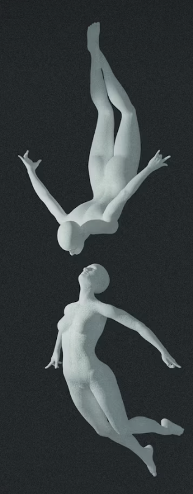
On a deeply human level, divine love is an emotional intoxication unlike any other. If the English phrase 'falling in love' describes the experiences of two lovers in a moment of sudden descent, the dictionary’s definition of "plunge" as “falling suddenly and uncontrollably" complements the spontaneity of the fall into which the lovers descend, into a vortex of emotions that defy any notion of reason and common sense.
With all that said, divine love, if openly shared, can seem pretentious; however, if it is truly and genuinely felt, it should stay hidden to maintain its sacredness. One may experience human love so deeply and intensely that it feels almost otherworldly, as if it originates from the divine realm.
Love and Poetry
How can we blend the simplicity of language beyond just syntactical accuracy, the complexity of scientific discoveries, and the elusive nature of mystical experience to define the intensity of love when we hide the true essence of a primordial attachment while also revealing enough of divine beauty to inspire a poetic expression powerful enough to touch the soul?
Although the vocabulary of human language may not fully capture love beyond common stereotypes, in a fog of perception, a poet's ink blot can keep us from falling into an abyss of madness. Poets manipulate and twist words in many ways to express meanings that approximate their intended thoughts. Rumi, the poet of love, for example, describes the indescribable and undefinable nature of love as follows:
هر چه گویم عشق را شرح و بیان
چون به عشق آیم خجل باشم از آن
گرچه تفسیر زبان روشنگر است
لیک عشق بیزبان روشنتر است [5]
Whatever I try to say about love, I end up laughing at my conclusion. Still, words can explain things, but love is better left unexplained.
Emily Dickinson describes the ‘heart’ and its desire in the simplest poetic terms possible: “The heart wants what it wants.”[6]
Rahman Baba blurs the line between human and divine love, where God's inspiring role in planting the seeds of divine love in the human heart supports the ultimate goal of venerating the divine as the object of human love.
چې مې مینه خدای په تا باندی پیدا کړه
ترکه ما په هغه ورځ خپله رضا کړه [7]
From the moment God created your love in my heart.
I abandoned all thoughts of self-contentment.
This links the realms of human and divine love, where love for a person can mirror love of the divine.
Conclusion
The limitations of the lexicon in expressing semantic complexities can sometimes be bypassed by stepping outside the poet’s mind. When a word is caught between its accepted meaning and its expanded interpretation in a second language, we find refuge in trance and translation, where we discuss love even without explicitly employing the word ‘love.’
Out beyond ideas of wrongdoing and rightdoing,
There is a field. I'll meet you there.
When the soul lies down in that grass,
The world is too full to talk about.
Ideas, language, even the phrase each other
Doesn't make any sense.[8]
Love is a yearning for the soulmate one is destined to meet on a higher plane where each other becomes irrelevant. Lucky are those who can see the reflection of their other half in the mirror of time.
__________________
[1] Nicole Villeneuve. What Happens to Your Body When You Fall In Love
Science & Technology, Interesting Facts. (Online)
[2] Nicole Villeneuve. What Happens to Your Body When You Fall In Love
Science & Technology, Interesting Facts. (Online)
[3] Damian R. Murray, Martie G. Haselton, et.al. “Falling in love is associated with immune system gene regulation.” Psychoneuroendocrinology, Volume 100, February 2019, Pages 120-126 https://www.sciencedirect.com/science/article/abs/pii/S0306453018306516
[4] Zoe Cormier’s work, ‘Gene switches make prairie voles fall in love.’ Nature. 2, June 2013
https://www.nature.com/articles/nature.2013.13112
[5] Rumi مولانا جلال الدین محمد بلخی. مثنوی معنوی، دفتر اول، بخش ۶، بردن پادشاه آن طبیب را بر بیمار تا حال او را ببیند. گنجور
https://ganjoor.net/moulavi/masnavi/daftar1/sh6/
[6] The Letters of Emily Dickinson, April 9th, 1862.
[7] رحمن بابا. دیوان Rahman Baba, Diwan
[8] Out Beyond Ideas of Wrongdoing and Rightdoing. Translated from Persian by Coleman Barks and John Moyne, from The Essential Rumi, published by HarperCollins. Copyright © 1995 by Coleman Barks.
https://poetrysociety.org/poetry-in-motion/out-beyond-ideas-of-wrongdoing-and-rightdoing